
Planning a single turbo conversion on a 2JZ or 1JZ? Here's the full real parts list so your build doesn't stall halfway.
Nearly every JZ build hits the same fork in the road: keep the factory sequential twins, or ditch them for one big single. The "single jingle" is one of the most common upgrades on the platform, and for good reason. But it catches a lot of people out, because the turbo itself is the cheap part. The bits that make it run are where the budget actually goes, and where half-finished builds end up sitting on a stand.
This is the honest version of what a single turbo conversion on a 2JZ or 1JZ really takes, so you can price the whole job before you start, not after you've already bought the turbo.
Why people convert from the factory twins to a single
The factory twin setup is clever. The sequential system uses one small turbo low down for response, then brings the second in up top. It works, but the plumbing is a maze of vacuum lines and actuators that loves to develop faults, and the small turbos run out of breath once you start chasing real power.
A single big turbo throws all of that away. You get one turbo, one manifold, one wastegate, and a far simpler engine bay. The trade is a bit more lag down low in exchange for a much stronger top end and a setup that's easier to tune and live with. For anyone pushing past the factory power band, the simplicity alone is worth it. You can actually see what's going on in there.
The single turbo conversion parts list (the bit that bites)
Here's the thing people miss. A single turbo is a system, not a part. Bolt the turbo on with none of the supporting gear and you've got an expensive paperweight. This is the full list of what you actually need to run one properly:
- The turbo. The headline item, sized to your power goal. Go too big and you'll kill your spool and hate driving it; this is the part to spec with someone who knows the platform.
- A tubular exhaust manifold. This mounts the turbo and routes exhaust gas into it. A good tubular manifold flows better and lasts longer than a cracked cast one.
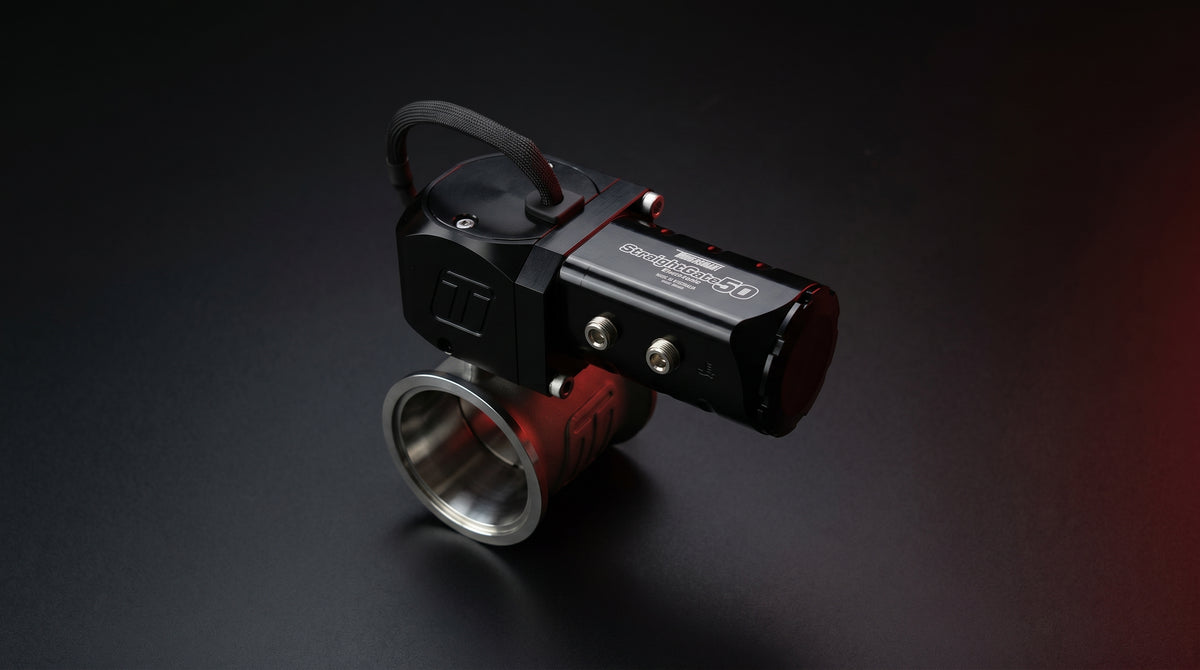
- A wastegate. External (with its own port welded into the manifold) or internal, depending on the setup. This controls boost. Run without proper boost control and you'll spike straight past your target.
- Oil feed and drain lines, plus water lines. The turbo needs oil to survive and, on most setups, coolant too. Get the feed restriction or the drain angle wrong and you'll smoke or wreck the bearings.
- A dump pipe and downpipe. These take exhaust away from the turbo and the wastegate back into the exhaust. The single most common reason a fresh conversion sounds and runs wrong.
- A front-mount intercooler and piping. A bigger single makes more heat, so the cooling and the charge piping have to keep up.
- A blow-off valve. Vents boost pressure when you lift off so you don't slam the compressor on every gear change.
- The ECU and a tune. Nothing about this runs on the factory map. You need a standalone ECU and a proper dyno tune to make it safe and make the power.
- Fuel system upgrades. More air needs more fuel. Bigger injectors and usually a bigger pump come into the picture the moment you raise the target.
That's the real shopping cart. Not one turbo, but eight or nine matched parts that all have to talk to each other.
The hidden cost: where conversions go wrong
Builds don't usually blow up because someone bought a bad turbo. They go wrong because the supporting parts were an afterthought. A monster turbo fed by stock injectors will lean out and melt a piston. A clean manifold with a cheap no-name wastegate that won't hold a target will spike boost and lift the head. An oil drain at the wrong angle backs oil up into the bearings.
The fix is to treat the conversion as one job with a set budget, then build the whole system to match the weakest part in it. If the fuel system tops out at a certain number, that's your power ceiling, regardless of how big the turbo is. Spec the supporting gear to the same number as the turbo and the whole thing comes together. Skimp on one corner and that corner decides how the engine dies.
If the internals underneath aren't up to the boost you're now able to make, that's a separate conversation, and one of our engine rebuild packages is the place to sort it before the turbo goes on, not after Uncle Rod comes to visit.
Doing it once, properly
A single turbo conversion is one of the most satisfying upgrades you can do to a JZ, as long as you buy the whole system rather than the headline part. Genuine, known-brand gear is what holds up under boost and what certifiers respect when it comes time for the WOF.
Have a look through our Garrett G-Series turbos and Turbosmart external wastegates to see what fits your goal, or call 0800 NZ PERFORMANCE and we'll help you spec the full list so nothing gets missed. You can also get in touch here if you'd rather send through your build details and let us put a parts list together with you.
Share:
eBay Turbos vs the Real Thing: Why Cheap Parts End Up Costing the Most
Choosing a Turbo for Your Power Goal, and the Fuel System to Feed It