
Why ARP head studs and the right MLS gasket stop 2JZ head lift on big boost, plus how to pick piston bore and compression for a boosted build.
You turn the boost up, the dyno reads well, and then on the next pull the temp gauge climbs and the car starts losing coolant out the overflow. That is usually head lift, and it is one of the most common ways a strong engine gets wrecked by a part nobody thinks about: the fasteners holding the head down. Get the clamping right and a JZ will hold serious boost. Get it wrong and you cook a head gasket on a Tuesday and tow it home.
What head lift actually is
Every combustion event pushes up on the cylinder head with real force. Cylinder pressure climbs fast when you add boost, and at some point that pressure overcomes the clamping force of the bolts holding the head to the block. The head lifts a fraction of a millimetre off the deck, just enough to break the seal on the gasket fire ring. Combustion gases blow past into the cooling system, coolant gets forced out, and the head can warp from the heat that follows. You lose the seal between combustion and coolant, and from there it gets expensive quickly.
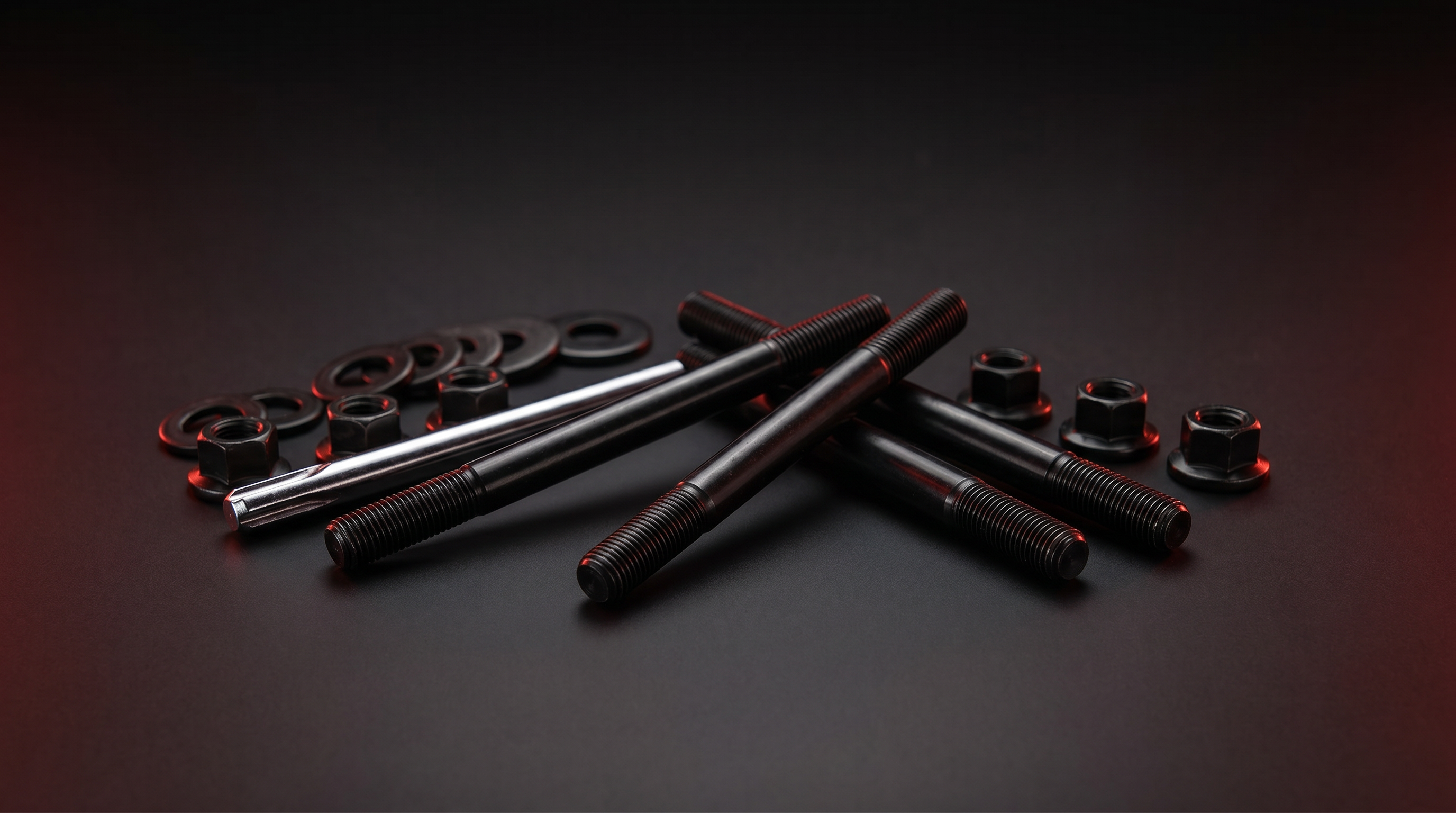
This is the problem behind the ARP head studs 2JZ head lift question that comes up constantly. Stock head bolts are torque-to-yield. They are designed once for a factory power level and they stretch slightly when fitted, which is fine at stock boost and not fine at double it. Studs are the fix, and they are not the whole fix on their own.
Why studs hold better than bolts
A stud threads into the block first and stays there. You then torque a nut against it, which means the clamping load is applied evenly and you are not twisting the fastener as you tighten it the way you do with a bolt. ARP studs are made from better material than the factory bolts and hold a higher, more consistent clamp load. That higher clamp is what keeps the head pinned to the block when cylinder pressure tries to lift it. They also let you torque, loosen and re-torque without the fastener giving up, which matters on an engine that gets pulled apart more than a stock one does. You can see the range we stock on our ARP fasteners page.
The gasket has to match the studs
Studs do half the job. The gasket does the other half, and the two have to suit each other. On a boosted JZ you want a multi-layer steel (MLS) gasket from a brand like Tomei or Cometic, not a stock composite one. An MLS gasket is several thin layers of spring steel that clamp into a tight seal and cope with the load and heat of high boost far better than the factory item.
Thickness matters too. The gasket thickness changes your compression ratio slightly and sets the deck clearance, so it is chosen alongside your pistons rather than grabbed off the shelf. A thicker gasket drops compression a touch, which can help on big boost, but it also changes how close the piston comes to the head at the top of its travel. This is why the gasket, the pistons and the head work get specced together, not one at a time. Our Cometic gaskets come in a range of bores and thicknesses so the build can be matched properly.
Pistons for a boosted build
Once the head is staying put, the next weak link is what is going up and down underneath it. Boost and heat are hard on pistons, and the factory cast pistons in a JZ have limits.
Forged beats cast for boost
Cast pistons are made by pouring molten metal into a mould. They are fine for stock power but they are more brittle, so detonation or a lean moment under boost can crack or hole one. Forged pistons are pressed from a solid billet under huge pressure, which makes the metal denser and far tougher. A forged piston takes the shock loads of boost and the heat of a hard tune much better, and it is what you want once you are pushing past stock power levels. They cost more, and there is a reason for that. You can look through the range on our CP forged pistons page.
Bore size and displacement
Pistons come in standard bore and a few overbore sizes, usually a small step over standard. An overbore means the block gets machined out slightly and a larger piston fitted. That does two things: it cleans up a worn or marked bore so you get a fresh, round cylinder, and it adds a little displacement. More displacement means a bit more capacity to make power and slightly better response. You do not chase huge overbores on a street engine because every cut leaves less cylinder wall, so most builds use a mild overbore to freshen the block, not a big one.
Choosing a compression ratio
Compression ratio is how much the air and fuel get squeezed before it lights. Higher compression makes more power and response off boost but leaves less headroom before detonation when you add boost. So a boosted build generally runs lower compression than a stock or NA engine. How low depends on how much boost you are running and, importantly, what fuel you are on.
Pump petrol is less detonation-resistant, so on a high-boost pump-gas car you lean towards lower compression to stay safe. E85 is far more resistant to knock and runs cooler, so you can carry more compression or more boost on the same setup. The fuel, the boost target and the compression ratio all get decided together. There is no single right number, and anyone who gives you one without asking what fuel you are running is guessing.
Building it as one job
The point of all this is that the studs, the gasket, the pistons, the bore and the compression are one decision, not five. The clamping load has to suit the boost, the gasket thickness has to suit the pistons, and the compression has to suit the fuel. When those line up, a JZ holds big boost and keeps the head sealed where it belongs.
If you want a hand matching studs, a gasket and pistons to your boost and fuel target, browse the ranges above or call us on 0800 NZ PERFORMANCE (06 359 2100). We build these engines ourselves, so we can spec it properly rather than sell you parts that do not work together.
Share:
Uncle Rod: What Actually Kills JZ Bottom Ends, and How to Stop Him Visiting
eBay Turbos vs the Real Thing: Why Cheap Parts End Up Costing the Most